
NO.1 Dermatology Specialist In Warrington
Menu
SCHEDULE AN APPOINTMENT NOW!
Experienced & Professional Specialist Skin Peel Treatments Available At Our Industry Leading Clinic. Enquire Today!

At Andrew Winter Ltd in Warrington, we provide specialist skin peel treatments that are very effective in removing sun spots and reducing the appearance of fine lines on the skin.
Our experienced, qualified team offer a warm welcome to all who visit our professional, industry-leading clinic at 1, The Shires, Moss Ln, Moore, Warrington WA4 6UN.
For more information about our services or to book your skin peel treatment consultation today. Contact us by phone: 07487 842 346 or by email: info@aesthetictreatmentswarrington.co.uk.
We look forward to hearing from you!
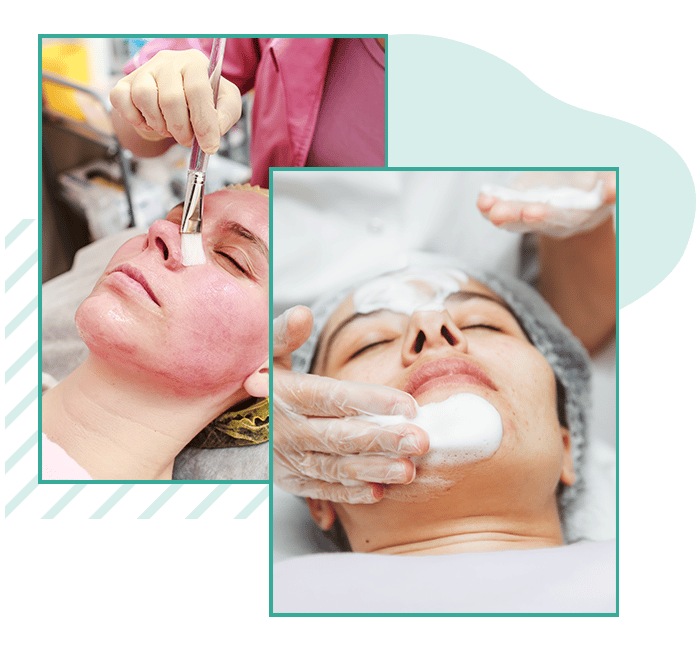
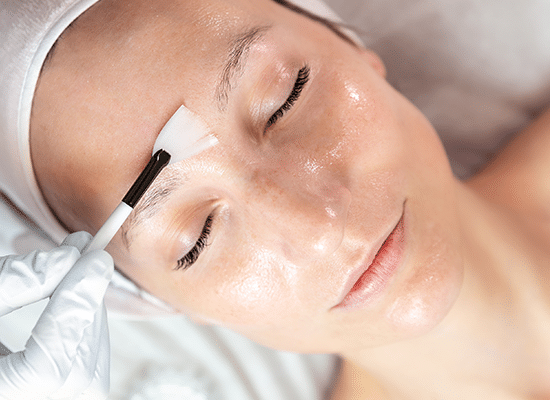
Skin peels are cosmetic treatments that use chemical solutions to exfoliate the skin and are extremely useful for helping improve the texture of the skin, and reduce the appearance of fine lines, wrinkles, facial scarring, and pigmentation irregularities.
The procedure involves applying a chemical solution to the face, which penetrates the top layers of skin, causing it to peel off and reveal smoother, more youthful-looking skin underneath.
There are different types of chemical peels, ranging from mild to deep, and they can be customized to suit individual skin types and concerns. It’s important to consult with us before treatment to ensure a safe and effective treatment.
The effects of a skin peel can last anywhere from a few weeks to several months, depending on the type of peel, the depth of treatment, and individual skin factors. To maintain the results of a chemical peel, it’s important to follow a proper skincare regimen, avoid excessive sun exposure, and schedule regular maintenance treatments as recommended by us during your aftercare service.
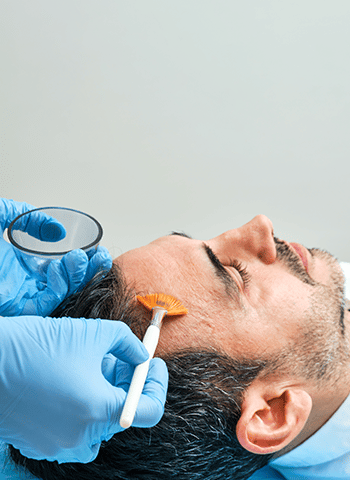
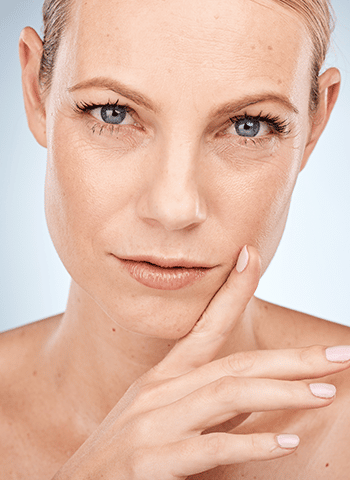
Please note that prices can vary depending on numerous factors including the quality of your skin, and the level of treatment required.
We are always happy to speak to new potential clients and will give you any additional information you require.
At Andrew Winter Ltd in Warrington, Dr Winter specialises in providing medium-depth and deep peels. Two basic types of chemicals used.
Trichloroacetic acid (TCA) provides medium-depth peeling and is used as an all-over face peel to alleviate the appearance of fine lines, pigmentation irregularities and lack-lustre appearances.
Phenol is a deeper peel that can be very helpful in treating the appearance of lines around the mouth and under the eyes.

After either of the aforementioned peels there will be mild swelling and tightness of the skin often accompanied by itching. This is soon replaced by peeling over the next few days. With phenol there is often weeping and oozing prior to crust formation.
It may well take several days for the peeling to come to an end. Following the end of the peeling, there may well be redness of the skin which can persist for some weeks but settles in time. Post-inflammatory pigmentation changes can also occur.
Hyperpigmentation (increased pigmentation) is more common in darker skin types and can sometimes persist for months. However, hyperpigmentation almost always settles fully in time.
Hypopigmentation (presenting as small areas of reduced pigmentation) is a rare occurrence following deep peels but can persist indefinitely. Finally, scarring is a very rare possibility and is similarly more common with deeper peels.
If you have any questions or would like to book a consultation for your skin peel treatment at our industry-leading clinic in Warrington, please call 07487 842 346 or email: info@aesthetictreatmentswarrington.co.uk and we will get back to you as soon as we can.
If you have any questions or would like to book a consultation for your skin peel treatment at our industry-leading clinic in Warrington, please call 07487 842 346 or email: info@aesthetictreatments
warrington.co.uk and we will get back to you as soon as we can.
Opening Hours: Monday – Friday 09:00 – 21:00 & Saturday – Sunday: 09:00 – 17:00
Opening Hours:
Monday – Friday 09:00 – 21:00
Saturday – Sunday: 09:00 – 17:00